Manufacturers can maximize legacy equipment IIoT ROI by retrofitting existing machinery with cost-effective sensors and gateways, which typically saves 60 to 80 percent compared to total machine replacement. This modernization strategy eliminates data silos and enables predictive maintenance without high capital expenditures; as a result, factories achieve significant operational savings and improved uptime.
Maintaining legacy equipment often feels like a race against diminishing returns, where manual data entry and unexpected downtime quietly erode your operational margins. Many leaders believe that digital transformation requires a complete, capital intensive replacement of their existing machinery; however, this assumption often leads to paralysis while competitors leverage data to optimize their floor. Bridging the gap between aging hardware and modern analytics is no longer a luxury, it is a financial necessity for remaining competitive in an increasingly automated landscape. This guide explores the pragmatic economics of industrial retrofitting, offering a clear path to modernization without a total machine overhaul. You will learn the exact formula for calculating IIoT ROI, the technical requirements for PLC to cloud architecture, and how to quantify the long term value of AI readiness for your legacy assets.
The Real Cost of Doing Nothing: Why Legacy Silos Drain Industrial Profits

In the industrial corridors of Parsippany-Troy Hills and across New Jersey, a silent killer is eroding operational margins. It is not just rising labor costs or supply chain volatility; it is the proliferation of data silos. Research indicates that mid-market manufacturers lose an average of $1.2 million annually to disconnected systems. These losses stem from redundant IT overhead, which can exceed $350,000 per year, and a decision lag of two to three weeks because critical floor data remains trapped in isolated machines.
Legacy equipment, often exceeding 15 years in service, functions as a black box. These machines lack the native connectivity to communicate with modern enterprise software, effectively hiding inefficiencies and impending failures from view. For facility managers in North Jersey, this creates a frustrating binary choice. They often feel forced to either commit to massive CAPEX for total machine replacement or continue operating in the dark. This perceived need to rip and replace is a myth that stalls the realization of legacy equipment IIoT ROI and prevents the adoption of industrial operations and AI infrastructure.
The reality is that data architecture bridges allow you to extract high-fidelity telemetry without decommissioning a single asset. By leveraging technical procurement services to source the right industrial gateways and sensors, manufacturers can bypass the high costs of new machinery while gaining the visibility required for uptime analytics. The cost of doing nothing is no longer just the maintenance price of an old machine; it is the seven figure loss in potential profit that legacy silos consume every single year.
The Economics of Retrofitting: Why Cloud Connectivity Saves 60 to 80 Percent Over Replacement
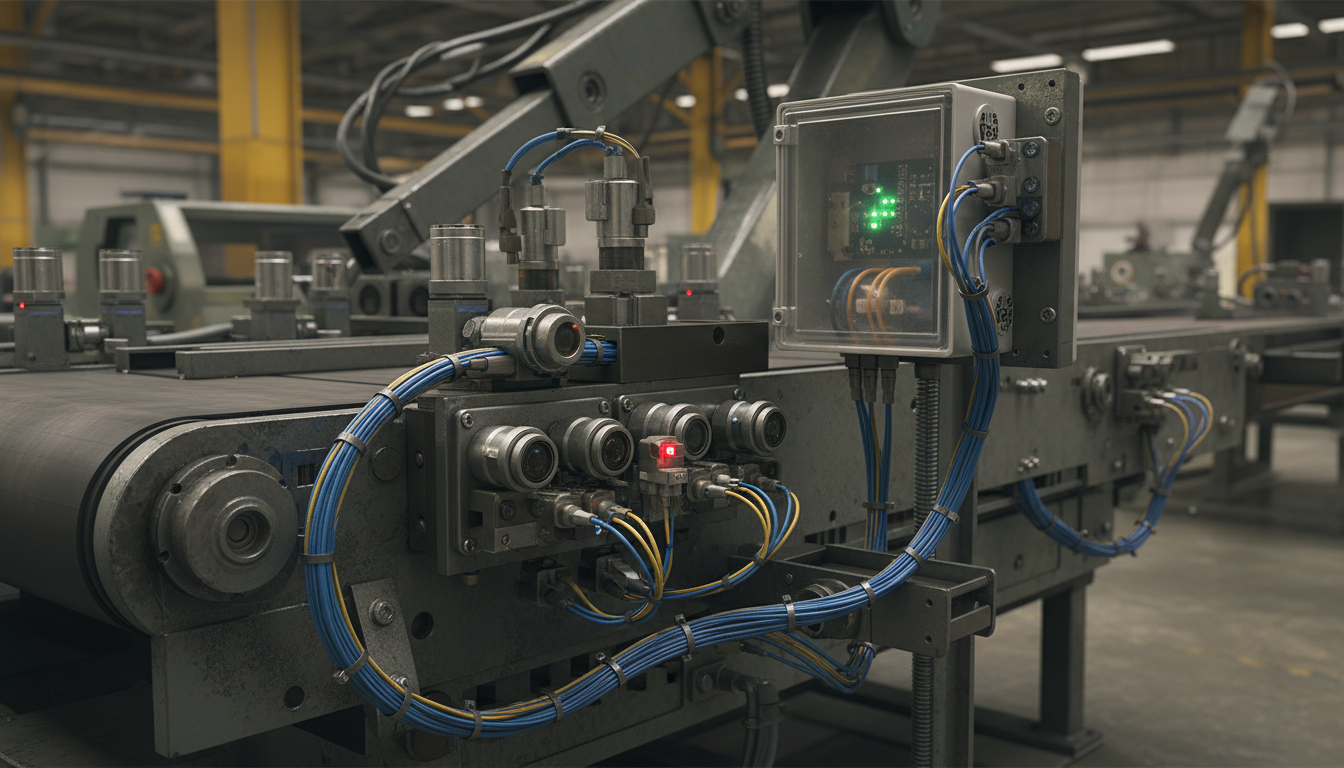
Industry data suggests that retrofitting existing assets for cloud connectivity typically saves between 60% and 80% compared to a full machine replacement. This stark difference in capital allocation allows manufacturers to achieve a higher legacy equipment IIoT ROI by focusing spend on data extraction and intelligence rather than mechanical hardware. While a new machine might offer better peak speeds, the primary bottleneck in modern manufacturing is rarely the physical movement of parts; it is the lack of visibility into why the machine stopped for twenty minutes during a night shift.
Expense Category | Full Machine Replacement | PLC-to-Cloud Retrofit |
|---|---|---|
Equipment Cost | $250,000 – $750,000+ | $5,000 – $15,000 |
Installation/Rigging | $20,000 – $50,000 | $2,000 – $5,000 |
Operator Training | 2–4 Weeks Lost | Minimal/None |
Decommissioning | $10,000 – $25,000 | $0 |
Lead Time | 6–12 Months | 4–8 Weeks |
A typical rip and replace project carries hidden costs that extend far beyond the purchase price. Decommissioning legacy assets requires specialized labor, while the installation of new equipment often necessitates floor reinforcements and significant downtime. Furthermore, the learning curve for staff to master a new control interface can lead to a temporary dip in OEE.
In contrast, retrofitting utilizes industrial gateways and bolt-on IoT sensors to bridge the gap. These devices act as translators, converting local machine signals into cloud-ready data packets. Through technical procurement services, firms can source hardened edge devices that survive harsh floor conditions while maintaining enterprise grade security. This approach allows for the development of industrial operations and AI infrastructure that preserves existing mechanical reliability while granting the asset modern digital capabilities. You can view our recent automation projects to see how these data bridges are implemented without interrupting active production lines.
The Legacy Equipment IIoT ROI Formula: Calculating Your Payback Period

To justify the investment in industrial operations and AI infrastructure, facility leaders must look past high level estimates and apply a rigorous financial model. The legacy equipment IIoT ROI is best measured by its ability to reclaim lost production time and reduce utility waste relative to the minimal cost of hardware integration. A standardized formula for calculating the net benefit of a retrofit project is:
Net Annual Benefit = (Reduced Downtime Cost + Energy Savings + Increased OEE) - (Hardware Retrofit Cost + Implementation Labor + Subscription Fees)
The most significant variable in this equation is the cost of unplanned downtime. For mid-sized manufacturers in the Northeast, the unplanned downtime cost manufacturing per hour typically ranges from $2,000 to $50,000; this depends heavily on the complexity of the product and the scale of the operation. If a production line in a Parsippany facility operates 2,000 hours a year with a 10% downtime rate, even a modest 5% reduction in that downtime saves 10 hours of production. At a $10,000 hourly cost, that equates to a $100,000 direct gain before accounting for energy efficiency or scrap reduction.
When you apply these gains to the lower capital requirements of retrofitting, the payback period becomes remarkably short.
ROI Variable | Industrial Impact Category | Financial Significance |
|---|---|---|
Reduced Downtime | Prevention of unplanned stops via telemetry. | $2,000 to $50,000 per hour saved. |
Energy Savings | Identifying peak load anomalies and idle waste. | 5% to 15% reduction in utility spend. |
OEE Increase | Real-time visibility into cycle times. | 3% to 8% increase in total throughput. |
Total Investment | Sourcing via technical procurement services. | 60% to 80% less than machine replacement. |
In most New Jersey industrial environments, this calculation results in a payback period of under six months. By identifying specific failure points through targeted technical procurement services for the right sensors and gateways, firms stop paying for black box uncertainty and start paying for measurable uptime. This transition from reactive maintenance to data-backed operations is what stabilizes margins in a volatile market, providing a clear path to amortizing the digital transformation within a single fiscal year.
Bridging the Gap: PLC to Cloud Architecture for Older Machines
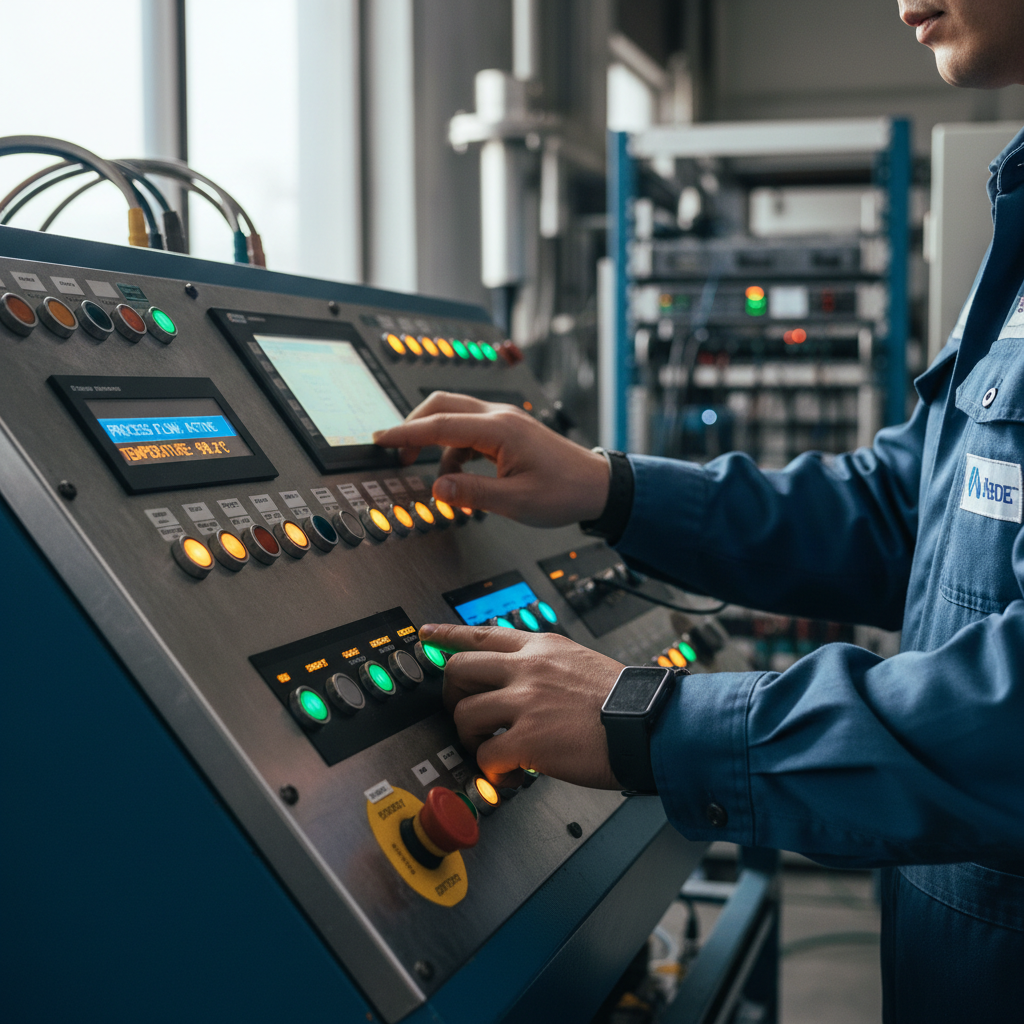
Achieving a rapid payback period depends on the technical execution of the data handshake between the factory floor and the enterprise stack. Most legacy PLCs operating in New Jersey plants rely on serial-based protocols like Modbus RTU or older Ethernet variants that modern cloud platforms cannot ingest directly. Lebron Industrial Operations & AI specializes in designing data pipelines that utilize protocol converters as the primary translator for these assets. By mapping register values from a twenty year old PLC to modern standards like OPC-UA or the lightweight, publish-subscribe MQTT protocol, we enable a bidirectional flow of information. This process transforms a siloed machine into a functional node within a larger industrial operations and AI infrastructure.
Effective architecture avoids sending raw noise to the cloud. We implement edge computing gateways to process telemetry locally before it leaves the factory floor, a critical step for maximizing legacy equipment IIoT ROI. By filtering high-frequency vibration data or calculating cycle times at the edge, we significantly reduce latency and minimize AWS or Azure IoT Hub storage costs. Instead of paying to store every millisecond of a motor's state, the cloud only receives the actionable anomalies and summarized performance metrics required for global analytics.
Selecting the right hardware for this bridge is a core component of our technical procurement services. We identify gateways that support industrial-grade security while offering the flexibility to interface with diverse legacy I/O types. You can view our recent automation projects to see how these architectures maintain system stability while providing the high-fidelity data necessary for advanced uptime modeling.
Quantifying the Intangibles: AI Readiness and Future Proofing
The true value of maximizing legacy equipment IIoT ROI extends beyond the immediate reduction in energy waste or downtime; it is about establishing a foundation for institutional survival. Modern manufacturing is rapidly bifurcating into those who operate based on historical guesswork and those who leverage real-time predictive models. A facility in Parsippany-Troy Hills that fails to bridge its legacy machines today is effectively opting out of the next decade of AI-driven advancements. Without connectivity, your equipment remains an island, unable to feed the large language models or machine learning algorithms that are becoming standard for operational excellence.
Structured data pipelines are the prerequisite for industrial operations and AI infrastructure. Without a reliable flow of clean, contextualized telemetry from the shop floor, sophisticated algorithms for predictive maintenance or autonomous supply chain adjustments remain theoretical. By investing in technical procurement services to install the necessary hardware now, firms move from a defensive cost-saving posture to an offensive growth strategy. This transition enables the shift from reactive repairs to a model where AI identifies failure patterns weeks before they manifest. Establishing this industrial operations and AI infrastructure ensures that legacy assets are not just surviving but are actively contributing to a scalable digital ecosystem, future-proofing the operation against market shifts and technical obsolescence.
Common Hurdles in Calculating ROI for Industrial Modernization
The path to a definitive legacy equipment IIoT ROI often encounters friction during the transition from hardware installation to data utility. While industrial sensors have become relatively inexpensive, the technical challenge lies in the connectivity work, the expert mapping of tags and the management of cybersecurity across disparate networks. Inconsistent data collection often stems from a lack of specialized technical procurement services, leading to hardware that fails to integrate with existing ERP or SCADA systems. Acknowledge that the disadvantage of IoT is not the technology itself, but the risk of creating a new silo of unorganized data if the architecture is poorly designed.
Beyond the technical stack, change management represents a significant hurdle. Operators and maintenance teams must trust the data for it to impact the bottom line. To mitigate risk and avoid the trap of pilot purgatory, where projects stall in a perpetual testing phase, focus your initial industrial operations and AI infrastructure on a single, high-value production line. You can view our recent automation projects to see how a phased approach allows for measurable wins that justify broader site-wide rollouts. This tactical start ensures that technical hurdles are cleared on a manageable scale before scaling complex data pipelines.
Modernizing your factory floor does not require a complete machinery overhaul. By focusing on targeted IIoT integration, you can achieve a significant return on investment while extending the life of your legacy equipment. If you want expert help navigating these technical shifts, we invite you to learn more about us and our approach to industrial AI. Our team is ready to help you identify the most impactful data points to ensure your digital transformation remains both practical and profitable.