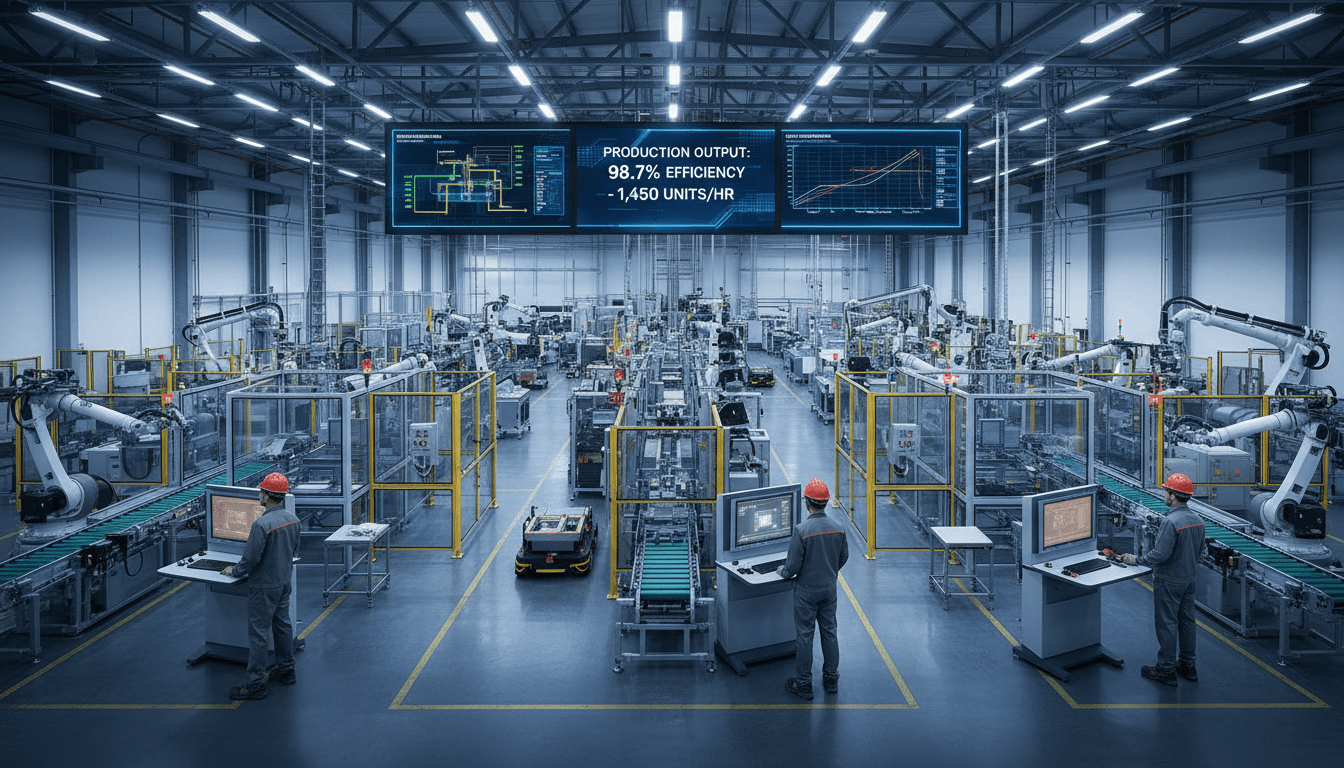
Predictive maintenance legacy equipment is achieved by leveraging existing PLC data to monitor asset health in real time; this process eliminates the need for expensive hardware replacements. By using data-driven insights to identify potential failures before they occur, industrial facilities can reduce downtime by up to 50% and significantly lower operational costs.
Many industrial facilities rely on legacy equipment that operates as a high reliability black box. These machines keep production lines moving, yet they lack the transparency required for modern operational excellence. You likely face a frustrating paradox where your most dependable assets are also the most difficult to monitor. The cost of a total equipment overhaul is prohibitive, yet the risk of unplanned downtime remains a constant threat to your bottom line. Fortunately, the solution does not require replacing your entire floor. This article explores how to bridge the gap between vintage hardware and predictive maintenance by leveraging the PLC data you already possess. We will examine the transition from reactive to predictive models, the technical bridge between PLCs and the cloud, and the integration of condition monitoring tools. You will learn how to extract actionable insights from your current assets to maximize uptime and improve long term ROI.
The Legacy Machine Paradox: High Reliability, Low Visibility
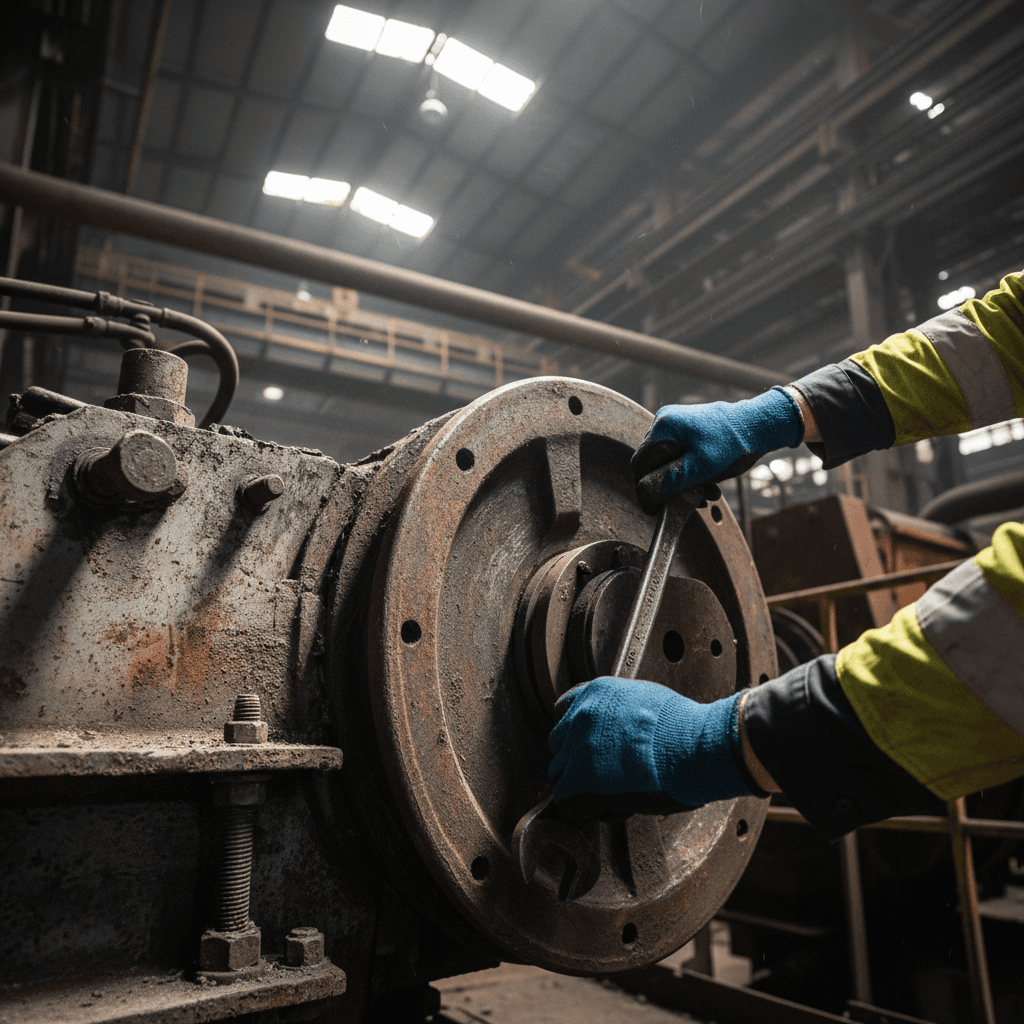
In the industrial corridors of Parsippany and Newark, it is common to find production lines anchored by machines that have performed reliably for two decades. These assets are often mechanically sound and could easily run for another twenty years, yet they remain dark from a digital perspective. This creates the Legacy Machine Paradox: equipment that is highly dependable but offers zero visibility into its internal health. When a critical component fails, operations shift into reactive maintenance, leading to costly unplanned downtime and emergency repairs that erode margins.
For many New Jersey manufacturers, the perceived solution is a complete rip and replace strategy, which is often a myth driven by a lack of specialized engineering. At Lebron Industrial Operations & AI, we focus on bridging this gap by leveraging the data already residing within your existing Programmable Logic Controllers (PLCs). Most legacy systems are already tracking the telemetry required for modern AI workflows, including motor current, cycle durations, and pressure variances. By establishing a robust data bridge, we transform these dark assets into visible, predictable components of your industrial operations and AI infrastructure, avoiding the capital expenditure of new machinery while achieving modern uptime standards. If you are unsure how to extract this value, you can contact our systems engineering team to audit your current hardware capabilities.
Understanding the Four Types of Industrial Maintenance
Auditing hardware is the first step toward moving away from the cycle of emergency repairs that characterizes many NJ facilities. To optimize these legacy assets, it is necessary to distinguish between the four primary maintenance strategies and identify where your facility currently sits on the maturity curve.
Maintenance Type | Operational Trigger | Cost Impact |
|---|---|---|
Reactive | Run to failure; repair after breakdown | Highest; involves emergency labor and lost production |
Preventive | Scheduled intervals; calendar or cycle-based | Moderate; involves premature part replacement |
Proactive | Root cause analysis; fixing systemic issues | Variable; focuses on long-term reliability improvements |
Predictive | Real-time condition monitoring via PLC data | Lowest; repairs are performed only when signals indicate need |
Reactive maintenance is the default for dark assets, leading to high-stress environments where teams are constantly fighting fires. Preventive maintenance attempts to mitigate this through scheduled intervals, but it is fundamentally inefficient; it treats every machine the same regardless of its actual workload. Proactive maintenance focuses on the "why" behind failures, such as addressing chronic misalignment in a conveyor system.
Implementing predictive maintenance legacy equipment moves the needle by focusing on actual health rather than an arbitrary schedule. In any industrial environment, the 80/20 rule applies: roughly 20 percent of your assets are responsible for 80 percent of your downtime and maintenance costs. By isolating these critical failure points and bridging their PLC signals to modern analytics, we can detect anomalies long before a breakdown occurs.
The primary difference between predictive and preventive strategies is the use of real-time data. A preventive schedule might dictate a bearing replacement every six months, even if the bearing is pristine. Conversely, a predictive approach monitors the machine's telemetry to catch a failure that might happen in month three due to unexpected load. This transition is essential for building resilient industrial operations and AI infrastructure that maximizes the remaining useful life of every legacy asset on the floor.
The Hidden Goldmine: PLC Data You Already Have
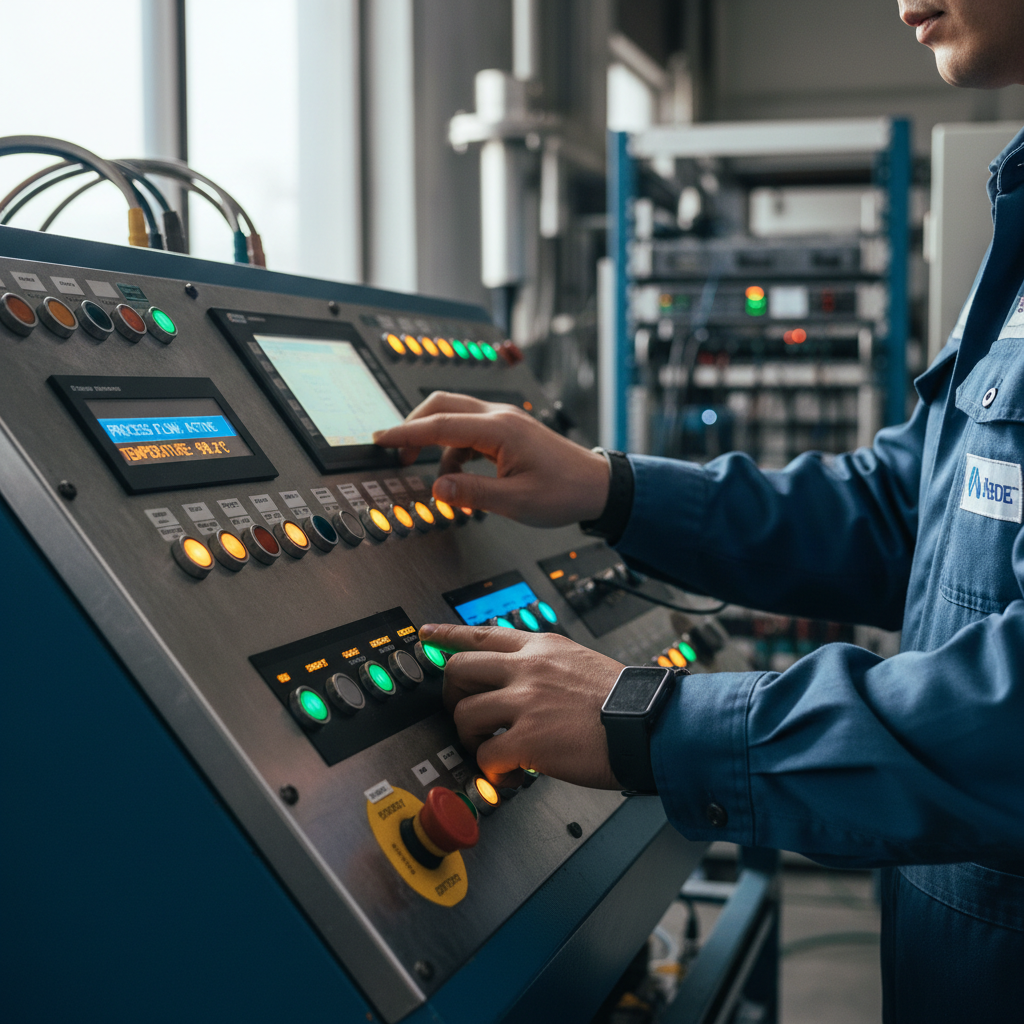
Transitioning to a predictive model does not require a total overhaul of your hardware because the necessary intelligence is likely already sitting in your control cabinets. A common misconception in the industry is that a machine lacking modern wireless connectivity is "dumb." In reality, most legacy assets in New Jersey plants are governed by PLCs from manufacturers such as Allen-Bradley, Siemens, or Schneider Electric. These controllers are already processing the exact telemetry needed for predictive maintenance legacy equipment, even if that data currently resides exclusively within local CPU registers.
The hidden goldmine consists of raw operational variables that the PLC uses for basic control logic but which contain significant diagnostic value when analyzed over time. Key data points already available include:
Cycle Times: A deviation in a machine stroke by as little as 0.5 seconds can be the first indicator of pneumatic cylinder wear or belt slippage.
Motor Current Draw: Sustained increases in amperage typically signal increased mechanical resistance, often caused by bearing degradation or lubrication failure.
Pressure Thresholds: Micro-fluctuations in hydraulic or pneumatic lines often precede seal failures long before a visible leak or pressure drop occurs.
Error Codes: Repeated, self-clearing non-critical faults are frequently the precursors to a total system lock.
By capturing these signals, we establish the foundation for modern AI workflows without the need for intrusive hardware changes. The machine is already speaking; the challenge lies in translating those local signals into a centralized format. If your team is unsure which registers contain these critical health indicators, you can contact our systems engineering team to audit your controller logic. Mapping these internal variables is the first step in building a robust industrial operations and AI infrastructure that prevents catastrophic failure through existing telemetry.
Building the PLC to Cloud Bridge Without Replacing Machinery

Extracting value from legacy systems requires a strategic data architecture that respects the machine's primary function: control. When we implement predictive maintenance legacy equipment at a facility, the objective is to build a "read only" data pipeline. This ensures that while we harvest telemetry, we never interfere with the PLC’s execution of its ladder logic or time-critical safety routines.
The technical bridge is typically established using Industrial Internet of Things (IIoT) gateways. These specialized edge devices act as protocol translators. Many machines in New Jersey’s manufacturing sector rely on older serial or Ethernet protocols, such as Modbus RTU/TCP or the legacy Data Highway Plus (DH+). These protocols are robust for local control but cannot natively communicate with modern cloud platforms. Our gateways ingest these legacy signals and convert them into lightweight, secure formats like MQTT (Message Queuing Telemetry Transport) or OPC-UA.
Component | Role in the Pipeline | Protocol Transition |
|---|---|---|
Legacy PLC | Local Control & Telemetry | Modbus, DH+, Siemens MPI |
IIoT Gateway | Edge Processing & Translation | Serial/Fieldbus to MQTT/OPC-UA |
Cloud Bridge | Data Ingestion & Storage | HTTPS, TLS-encrypted MQTT |
AI Analytics | Anomaly Detection | REST API / Python Workflows |
By designing these pipelines correctly, Lebron Industrial Operations & AI enables real-time data streaming to a centralized industrial operations and AI infrastructure. This architecture allows for heavy-compute modern AI workflows to analyze trends, such as statistical process control (SPC) deviations or multi-variable correlation, that would overwhelm a standard PLC processor. Because the gateway sits alongside the controller rather than replacing it, the transition is seamless and low-risk. If your facility needs to map out a secure communication path for its existing hardware, contact our systems engineering team to discuss a custom bridge architecture.
Integrating Condition Monitoring: Vibration, Temperature, and Beyond
While internal telemetry like motor current provides a strong baseline, certain mechanical failure modes are best detected through physical condition monitoring. Augmenting your existing PLC data with external sensors allows for a more granular view of equipment health, particularly for rotating assets like pumps, fans, and gearboxes. Vibration analysis and temperature monitoring are the most effective add-ons for enhancing predictive maintenance legacy equipment workflows.
Vibration sensors, or accelerometers, detect high-frequency oscillations that the PLC’s standard control logic might ignore. These sensors identify specific signatures of misalignment, rotor imbalance, or bearing cage degradation. By establishing a baseline of normal vibration levels, modern AI workflows can flag subtle harmonic shifts that indicate a component is nearing the end of its fatigue life. Similarly, non-contact infrared temperature sensors or thermocouples provide real-time thermal data. A steady rise in housing temperature often points to friction-related issues, such as lubrication failure or belt slippage, long before a thermal overload trip occurs.
The challenge for many NJ plants is ensuring these new sensors can communicate with hardware designed decades ago. This is where technical procurement services become critical. Integrating modern IO-Link sensors or 4-20mA analog transducers into a legacy rack requires a precise match of signal types and power requirements. Our team ensures that new hardware is compatible with your existing I/O modules or edge gateways, preventing data silos. If you are ready to enhance your industrial operations and AI infrastructure with targeted sensing, you can contact our systems engineering team to specify the hardware required for your specific asset class.
Predictive Maintenance ROI: Uptime and Cost Analysis
The financial justification for integrating these sensors and data bridges is rooted in measurable operational recovery. For New Jersey manufacturers, where labor rates and utility overhead are among the highest in the country, the ROI on predictive maintenance legacy equipment is realized through the elimination of emergency premiums on parts and labor. Research across the industrial sector indicates that transitioning from reactive to predictive models yields a 10 to 40 percent reduction in overall maintenance costs and an average 50 percent decrease in unplanned downtime. These figures represent a significant clawback of lost production hours that directly impacts the bottom line.
Operational Metric | Estimated Impact of Predictive Transition |
|---|---|
Maintenance Cost Reduction | 10% to 40% |
Unplanned Downtime Reduction | ~50% |
Equipment Life Extension | 20% to 30% |
Spare Parts Inventory Savings | 15% to 25% |
In a 24/7 industrial environment, the true opportunity cost of a breakdown exceeds the price of a replacement part. It includes the cascading effects of missed delivery windows, wasted raw materials, and idle labor. By establishing modern AI workflows, facilities can automate the notification process. Instead of a technician discovering a seized motor during a graveyard shift, the system generates an alert weeks in advance when vibration patterns or current draws first deviate from established baselines. This allows for scheduled interventions during planned stoppages, preserving the integrity of your industrial operations and AI infrastructure. If you are looking to quantify the potential savings for your specific facility, you can contact our systems engineering team for a detailed uptime analysis.
Developing a Roadmap for Legacy Asset Modernization

Moving from a reactive posture to a data-driven strategy requires a phased approach that minimizes operational disruption. Plant managers should begin by identifying "bad actors," the specific machines that historically drive the highest downtime or repair costs in the facility. This targeted focus ensures the project demonstrates value quickly without the risk or complexity of a site-wide overhaul.
Audit PLC Capabilities: Document the controller model, firmware version, and available communication ports. Determine if the PLC has unused analog inputs or if health telemetry must be pulled exclusively from existing internal registers.
Deploy a Pilot Bridge: Install an IIoT gateway on one critical asset to establish a read-only connection. This pilot should stream telemetry into modern AI workflows to validate the integrity of the data pipeline without affecting the machine's control logic.
Establish Baselines: Collect three to four weeks of high-resolution operational data. This period defines "normal" behavior for motor current, cycle times, and pressure, providing the necessary reference point for anomaly detection.
Refine Threshold Logic: Transition from fixed setpoints to statistical deviations. Use the pilot data to train models that recognize the subtle signatures of component wear.
Scale Across the Facility: Once the pilot proves the reliability of predictive maintenance legacy equipment signals, replicate the gateway architecture across similar asset classes.
This structured modernization of industrial operations and AI infrastructure allows for incremental investment based on proven performance. If your facility needs a technical audit to prioritize these steps and identify which controllers are ready for connectivity, contact our systems engineering team to map your hardware landscape.
Predictive maintenance does not require a total overhaul of your shop floor. By leveraging the PLC data you already have, you can reduce downtime and extend the life of legacy assets. Turning raw signals into actionable insights takes a focused strategy. If you want expert help navigating these technical challenges, we invite you to read more about our approach to industrial AI. Understanding our methodology is a great next step toward building a more resilient, data-driven operation for your facility.